A DIGIBYTE
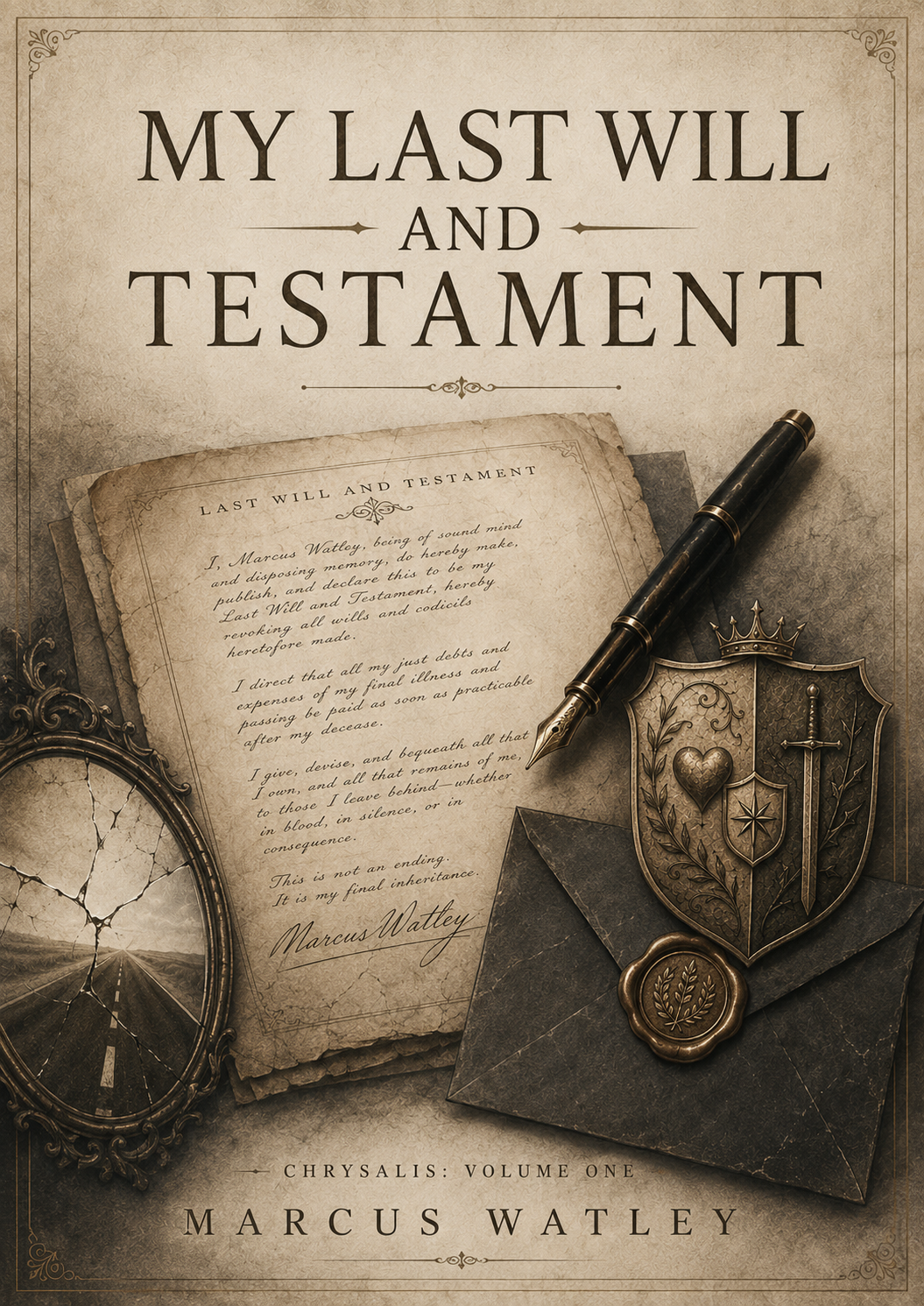
MY LAST WILL AND TESTAMENT
A work of fiction by Marcus Watley.
A man on the run pauses long enough to leave behind one final account—of what he pursued, what he destroyed, what he survived, and what may still be waiting for him.
OFFICIAL READING SAMPLE
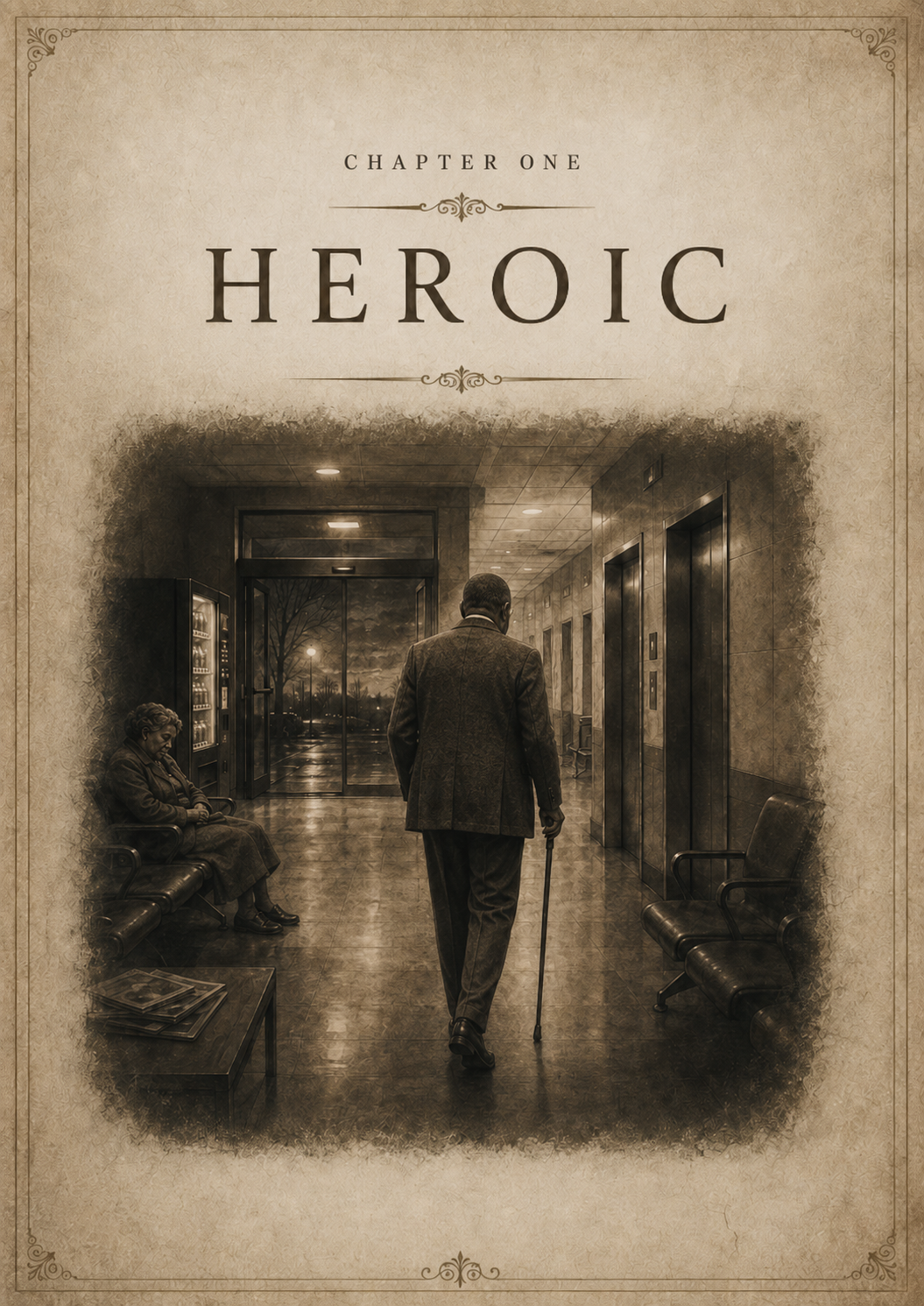
CHAPTER ONE: HEROIC
Everybody respected heroes.
Doctors. Surgeons. Nurses. Paramedics. People who walked into a room while death was still deciding what it wanted and came back out carrying somebody else’s miracle.
I worked downstairs.
Most patients never knew our department existed. They woke from surgery thanking God, their families, and whichever doctor’s name had been printed in large letters on the paperwork. Nobody thought about the hands that had taken apart the instruments afterward, scrubbed away whatever the human body had left on them, inspected every hinge and groove, rebuilt the trays, wrapped them, labeled them, and sent them back upstairs.
That was fine with me.
At least, that was what I had always told myself.
My badge said MARCUS — CENTRAL STERILE PROCESSING, though most people who came through the department called me “brother,” “buddy,” or “excuse me.” The surgeons rarely looked at the badge. They came for their trays and disappeared.
“Seven ready?” one of them asked me that morning.
He was already reaching for the cart before I answered.
“Yes, sir.”
He checked the label, turned, and pushed the tray toward the elevator.
No thank-you. No nod. Nothing openly disrespectful, either. Just the natural indifference people reserved for objects that worked correctly.
I returned to the sink.
The water ran hot over my gloves. Beneath the surface, clamps and forceps knocked softly against the stainless-steel basin. A pair of scissors opened and closed in my hand while I brushed dried matter from the joint.
There was something honest about used instruments.
They did not pretend they had never cut anybody.
“Marcus.”
Denise stood behind me holding a clipboard against her chest. She had worked in the department twelve years longer than I had and carried herself like the building had disappointed her personally.
“You covering decontam after lunch?”
“I’m scheduled in assembly.”
“I know.” She tilted her head and gave me the look people gave when they were not asking a question. “Tamika called out.”
I looked through the window into the next room. Two unfinished carts waited beside my station.
“I’m already behind.”
“You fast.”
That was one of the words people used when they wanted something from me. Fast. Reliable. Patient. Humble.
Nice.
I turned back toward the sink.
“Okay.”
“I appreciate you.”
Denise walked away before the sentence had finished sounding true.
I had spent most of my life being appreciated immediately before being inconvenienced.
My mother had raised me to believe that character was revealed by what a man tolerated. A man did not complain every time the world failed to arrange itself around his comfort. A man helped when he could. He kept his word. He did more than what was required without needing applause.
I had followed those instructions carefully.
At forty-nine, I rented an apartment with thin walls, drove a car that made a different noise every season, and worked beneath people who occasionally used my name when the situation required blame.
Still, I considered myself fortunate.
That was another habit.
At lunch, I sat alone near the vending machines with a plastic container of rice and vegetables. The cafeteria was loud with overlapping conversations, rolling carts, and televisions mounted too high for anyone to watch comfortably.
Trey dropped into the chair across from me without asking.
“You still making music?”
“Sometimes.”
He tore open a bag of chips.
“I saw one of your videos. That was you with the graveyard stuff, right?”
“Yeah.”
He chewed while looking at me as though my answer had confirmed something unfortunate.
“You ever think maybe you too old to still be chasing that?”
The question came with a smile, which was how people delivered cruelty when they wanted permission to call it humor.
I smiled back.
“Maybe.”
Trey laughed, satisfied that I had agreed with him, then began telling me about a woman he had met over the weekend.
Under the table, the plastic fork bent between my fingers.
I straightened it before throwing it away.
That afternoon, Silas Horne brought a group of visitors through the surgical wing.
Silas was the hospital’s chief operations officer, though most employees knew him from promotional videos. He had a silver beard cut close to his jaw, expensive suits, and the posture of a man who expected doors to understand his importance.
He was speaking to three members of the hospital board when I encountered them in the corridor.
“At Saint Bartholomew, every employee is family,” Silas said. “From our world-class surgeons to our environmental services staff, everyone understands that their contribution matters.”
I was pushing a loaded cart toward the elevator. Silas and his guests stood across the width of the hallway.
“Excuse me,” I said.
He held up one finger without looking at my face.
“One moment.”
The trays were heavier than they appeared. I tightened my grip and waited.
“Our employees are our greatest investment,” Silas continued. “We believe people perform at their highest level when they feel seen.”
One of the board members nodded solemnly.
Silas stepped aside when he finished making his point. I pushed the cart past them.
Nobody moved far enough to make it easy.
That evening, while changing out of my work shoes, the pain returned.
It began beneath my ribs and reached around my side like a hand trying to find the proper place to hold me. I remained seated on the locker-room bench until it passed.
The fluorescent light above me flickered.
In the narrow mirror mounted inside my locker, my reflection was divided by a seam in the metal. One Marcus stared back from the left side. Another occupied the right.
Neither looked heroic.
I closed the locker.
The waiting room near the east entrance was almost empty when I walked through it. An elderly woman slept beneath a television. A janitor guided a dust mop along the baseboards. Near the vending machines sat a man I had never seen before.
He wore a dark suit without a tie. His hair was gray at the temples, and both hands rested over the silver head of a black cane. Nothing about him demanded attention, yet the room seemed arranged around his stillness.
I might have passed without speaking if he had not looked directly at me.
“Long day?” he asked.
His voice was low and pleasant.
“Same as always.”
He studied me for a moment. Not rudely. Precisely.
“That is rarely true.”
I stopped.
He smiled as though he understood why.
“But it is what useful men say.”
The automatic doors opened behind me and released a breath of cold evening air into the waiting room.
“Do I know you?” I asked.
“No.”
He adjusted one cuff.
“But I know your kind.”
Something in me tightened.
“My kind?”
“Men who keep rooms alive without ever being invited into them.”
For several seconds, neither of us spoke.
He rose carefully, though he did not appear to need the cane.
“Good evening, Marcus.”
He began walking toward the interior corridor.
I watched him pass the sleeping woman and disappear beyond the elevators.
“I didn’t tell you my name.”
He did not stop.
“No,” he said.
Then he was gone.
I should have gone home.
I should have eaten dinner, taken something for the pain in my side, and prepared myself to repeat the same day tomorrow.
Instead, I stood alone in the waiting room, staring down the corridor where the stranger had disappeared.
For the first time in years, somebody had looked at me and seemed to see more than what he needed.
THE STORY CONTINUES
What happens when a good man decides that goodness has failed him?
My Last Will And Testament is only the beginning of his transformation.
AUTHOR’S NOTE
My Last Will And Testament began as music before it became a story.
The ten chapters share their titles with the ten songs from the first volume of Chrysalis, but this book is not a literal explanation of the album. It is another expression of the same transformation: a man confronting mortality, resentment, unrealized potential, and the dangerous belief that power can repair what disappointment has damaged.
Marcus is a fictional character, although some of his fears, regrets, contradictions, and ambitions come from emotions I understand personally. The hospital, Mr. Vale, Silas Horne, The Powers That Be, and the events surrounding them belong to the world of this story.
At its center is a question: What happens when a good man decides that goodness has failed him?
Marcus believes he has spent his life being useful, patient, and overlooked. When death appears to place a deadline on everything he has postponed, survival begins to look more important than innocence. His fall does not begin with murder. It begins with the moment he decides that his pain entitles him to become someone else.
This is the first part of a larger journey.
My Last Will And Testament is the death of one version of Marcus.
What follows is what rises in his place.